
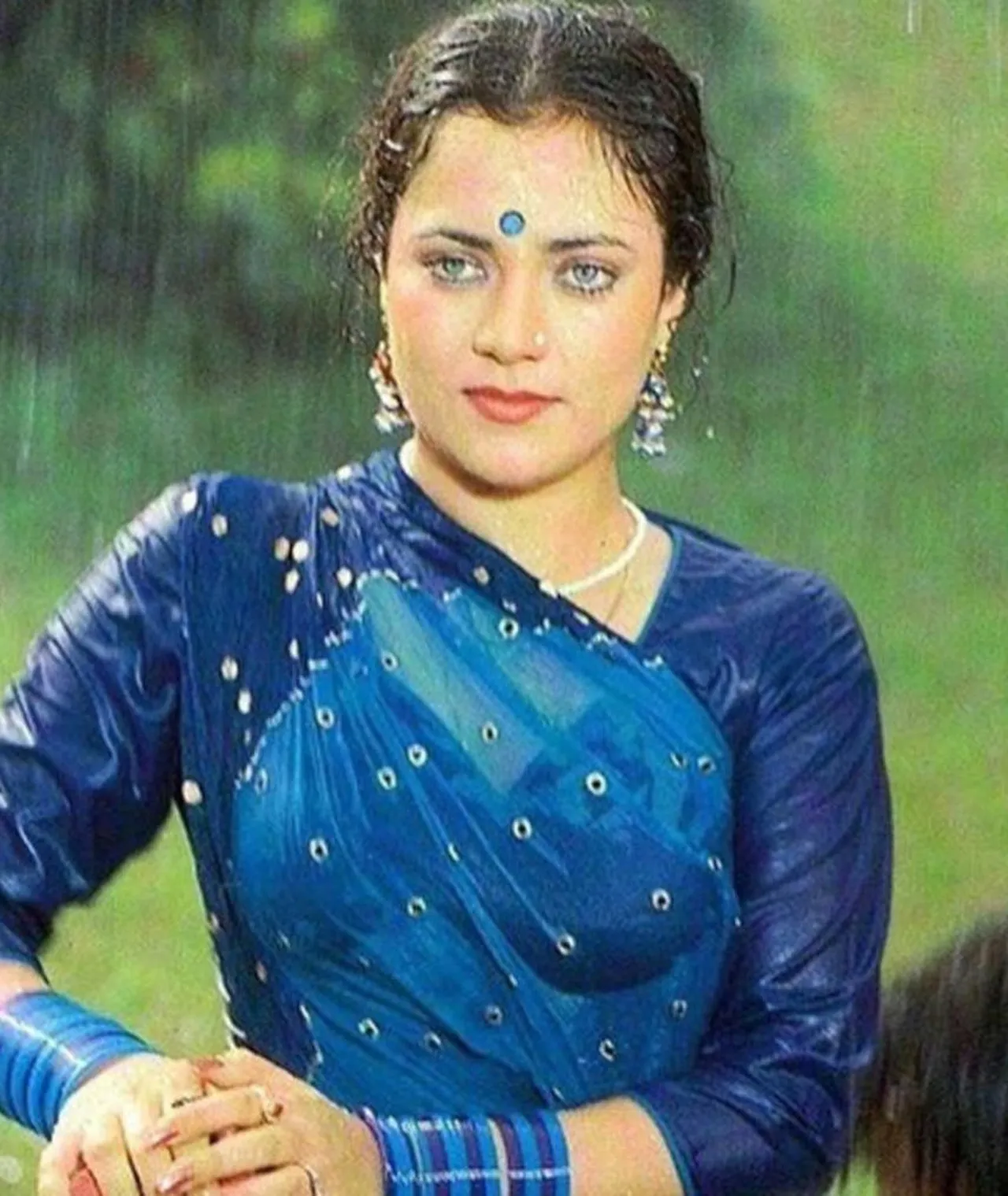
Overview Table
| Aspect | Details |
|---|---|
| Full Name | Yasmeen Joseph (known professionally as Mandakini) |
| Date of Birth | July 30, 1963 |
| Place of Birth | Meerut, Uttar Pradesh, India |
| Profession | Actress, Model |
| Industry | Hindi Cinema (Bollywood) |
| Years Active | 1985 – 1996, comeback post-2022 |
| Debut Film | Ram Teri Ganga Maili (1985) |
| Most Notable Films | Ram Teri Ganga Maili, Dance Dance, Tezaab, Pyaar Karke Dekho, Jaal, Kasam Paida Karne Wale Ki |
| Spouse | Dr. Kagyur T. Rinpoche Thakur (Tibetan Buddhist monk and singer) |
| Children | 2 (including rapper Rabby Thakur) |
| Known For | Bold roles, expressive eyes, timeless charm, and iconic presence in 1980s Hindi cinema |
| Current Involvement | Spiritual life, music videos, occasional media appearances |
| Legacy | A blend of bold beauty, mystique, and cinematic impact that transcends generations |
Mandakini Introduction
Mandakini remains one of the most fascinating and talked-about actresses in the history of Indian cinema. She was not just a film star; she was a symbol of change — someone who challenged the norms of the 1980s Bollywood era with her daring choices, captivating screen presence, and emotional performances. While many remember her for the controversial scenes in Ram Teri Ganga Maili, her career was much more than that.
She embodied both vulnerability and strength. Mandakini’s story is one of brilliance and mystery — an actress who rose to fame overnight, faced challenges few could imagine, and chose a life of peace and spirituality over glamour and chaos.
Her journey from Yasmeen Joseph of Meerut to the silver screen’s unforgettable Mandakini is a story filled with dreams, destiny, and determination.
Mandakini Early Life and Background
Born as Yasmeen Joseph on July 30, 1963, in Meerut, Uttar Pradesh, Mandakini grew up in a middle-class Anglo-Indian family. From a young age, she showed signs of artistic curiosity — fascinated by movies, dance, and music. Like many young women of her generation, she dreamed of seeing herself on the big screen, but her path was far from easy.
As a teenager, she participated in local cultural programs, where her expressive eyes and charm drew attention. Her friends encouraged her to try modeling, and she began doing small print ads and photoshoots in Mumbai. It was during one of these photoshoots that destiny played its role — a chance photograph caught the attention of legendary filmmaker Raj Kapoor.
Mandakini The Discovery by Raj Kapoor
Raj Kapoor was known for introducing some of Bollywood’s most memorable leading ladies — Nargis, Vyjayanthimala, Padmini, and later, Dimple Kapadia. When he saw Mandakini’s photo, he saw the same spark. After several rounds of discussion and auditions, she was cast as the lead in Ram Teri Ganga Maili (1985).
This film was more than just her debut; it was a revolution. Raj Kapoor’s cinematic vision, combined with Mandakini’s innocence and courage, created something unforgettable. Despite being a newcomer, she delivered a performance that balanced purity, sensuality, and emotion.
The film became one of the biggest blockbusters of the 1980s, and Mandakini became an overnight sensation — hailed as both a symbol of beauty and a lightning rod for debate.
Mandakini Stardom and Success
Following the massive success of Ram Teri Ganga Maili, Mandakini’s career took off. She began receiving offers from major directors and starred opposite some of the biggest names in Bollywood — including Mithun Chakraborty, Govinda, Jeetendra, and Anil Kapoor.
Films like Dance Dance (1987), Tezaab (1988), and Kasam Paida Karne Wale Ki (1984) showcased her versatility. She could perform in romantic dramas, action thrillers, and musical blockbusters with equal ease.
Her on-screen chemistry with Mithun Chakraborty was particularly celebrated, and together they formed one of the most popular on-screen pairs of that era. Mandakini was not just known for her looks — her ability to bring emotion, intensity, and sincerity to her roles earned her genuine admiration from audiences and critics alike.
Mandakini The Bold Image and the Controversies
Mandakini’s success came with controversy. Her bold portrayal in Ram Teri Ganga Maili — especially the now-iconic waterfall scene — was considered ahead of its time. In an era when Bollywood was still conservative, her performance ignited debates about morality and artistic expression.
While some labeled her bold, others praised her for breaking barriers and normalizing natural beauty and freedom on screen. Raj Kapoor defended her scenes, emphasizing their purity and artistic intent.
Later, Mandakini faced rumors linking her to underworld figures, which unfortunately overshadowed her talent. Media speculation grew intense, and despite her denials, the constant scrutiny began affecting her personal and professional life.
Yet, through all this, she maintained her dignity, often choosing silence over confrontation — a rare strength that added to her mystique.
Mandakini Beyond Glamour: The Real Mandakini
Behind the dazzling stardom and headlines was a woman deeply spiritual and introspective. Mandakini was known among her close friends as gentle, thoughtful, and grounded. She was never entirely comfortable with the chaos of stardom and longed for inner peace even at the height of her fame.
Her colleagues admired her professionalism — she was punctual, dedicated, and respectful on set. Directors often praised her ability to emote naturally without overacting. For Mandakini, acting was never about fame alone; it was about connection — expressing emotions that touched people’s hearts.
Mandakini Transition and Challenges
The late 1980s and early 1990s marked a transitional phase in it’s life. Bollywood was changing — newer faces were emerging, and audience preferences were shifting.
it’s career slowed down as she became more selective about her roles. Her association with controversial figures, whether true or exaggerated by tabloids, affected her professional image. The constant media pressure, coupled with her growing disillusionment with the film industry, led her to step away from the limelight.
By the mid-1990s, she had quietly disappeared from mainstream cinema, leaving behind fans and admirers who still remembered her grace and charm.
Mandakini Love, Family, and Spiritual Life
In a surprising twist, she found love and peace in an unexpected place. She married Dr. Kagyur T. Rinpoche Thakur, a former Buddhist monk who had once appeared in a music video. Their relationship blossomed through shared values of simplicity and spirituality.
Together, they built a family rooted in compassion, faith, and humility. They settled into a peaceful life away from Mumbai’s chaos. she became involved in spiritual and social activities, occasionally helping her husband with his medical and community work.
Her decision to choose a life of love and spirituality over fame was both bold and beautiful. It reflected her authenticity — she had lived on her own terms from the very beginning.
Mandakini Life Away from the Spotlight
For over two decades, she stayed away from the media, focusing on family and inner peace. She rarely gave interviews, preferring privacy over publicity.
While fans speculated about her whereabouts, she quietly lived a content life in Mumbai. Occasionally, she attended spiritual gatherings or family events but avoided the limelight. Her transformation from a screen goddess to a serene, grounded woman fascinated many — it was almost poetic.
In a way, her journey symbolized the duality of existence — the external beauty admired by millions, and the inner calm found through introspection.
Mandakini The Comeback and New Chapter
In 2022, she surprised everyone with her return — not in a big-budget film, but in a heartfelt music video titled Maa O Maa, which also featured her son Rabby Thakur.
This comeback wasn’t about reclaiming fame but about expression and connection. It showed her maturity, confidence, and the bond with her son. Fans were delighted to see her again — radiant as ever, yet wiser and more graceful.
Her return symbolized resilience. After decades away, reminded the world that true artistry never fades. Her face carried stories — of fame, love, heartbreak, and peace.
Mandakini’s Cinematic Style and Legacy
Mandakini’s acting style was marked by natural charm and emotional sincerity. She didn’t rely heavily on dramatics or exaggerated expressions. Instead, she let her eyes do the talking.
Her performances were layered — soft yet powerful. Whether playing a vulnerable girl, a strong lover, or a woman torn between choices, she brought depth and honesty.
She influenced many actresses who came after her — particularly in how she balanced sensuality with emotion. Her courage to take unconventional roles opened doors for future generations of actresses to explore more expressive, layered characters.
Mandakini’s Impact on Indian Cinema
Mandakini’s impact on Indian cinema goes beyond box-office numbers. She represented a shift — a move from formulaic portrayals of women to more expressive and independent characters.
Her debut in Ram Teri Ganga Maili broke several taboos and proved that audiences were ready for nuanced storytelling. Moreover, her journey inspired filmmakers to experiment with bolder female leads.
Even today, her name evokes nostalgia — a reminder of an era when films carried both innocence and intensity.

Controversy, Misunderstanding, and Media
While Mandakini was adored by fans, she was also a victim of sensational media coverage. The 1980s and 1990s lacked the balanced journalism we see today. Rumors often overshadowed truth.
She was linked to underworld figures without evidence, and these stories hurt her reputation deeply. For a young actress, the experience was painful. However, her silence spoke louder than any defense — she chose dignity over drama.
Years later, people realized that much of the gossip was exaggerated. In hindsight, Mandakini’s grace during those turbulent times stands as one of her most admirable qualities.
Mandakini Beauty and Fashion Influence
Mandakini’s beauty was timeless. Her expressive eyes, radiant skin, and effortless simplicity set her apart. She was among the few actresses who could appear equally stunning in a traditional saree or a modern outfit.
Her fashion sense was understated yet elegant — flowing fabrics, soft colors, and minimal makeup. She inspired an entire generation of young women to embrace natural beauty.
Even decades later, her looks remain iconic. Social media often rediscovers her images, proving that true beauty transcends time and trends.
Mandakini Relationship with Raj Kapoor Family and Legacy
Raj Kapoor was not just her mentor but also the person who shaped her early artistic identity. Despite the controversies, she always spoke of him with gratitude and respect.
The Kapoor family, too, acknowledged her contribution to Ram Teri Ganga Maili’s success. The film remains one of Raj Kapoor’s masterpieces, and Mandakini’s performance is central to that legacy.
Her association with the Kapoors reflects the trust and artistic chemistry they shared — one that left a lasting mark on Indian cinematic history.
Mandakini’s Philosophy and Values
Mandakini’s life reflects a profound philosophy — that fame is fleeting, but peace is eternal. Her journey from Bollywood glamour to Buddhist-inspired simplicity shows her evolution as a human being.
She believes in kindness, detachment from negativity, and compassion toward all beings. Her spiritual outlook helped her handle both success and suffering with grace.
In many ways, Mandakini teaches that reinvention is not about image but about inner growth.
The Modern Relevance of Mandakini
In today’s era of social media fame and fleeting popularity, Mandakini’s story feels refreshing. She reminds us that authenticity matters more than attention.
Her ability to walk away from fame at its peak, and return decades later on her own terms, shows emotional strength. For young artists today, she stands as a symbol of self-respect and purpose.
She’s proof that even when the world forgets, true talent and grace never fade.
Lessons from Mandakini’s Journey
Here are a few timeless lessons one can draw from Mandakini’s life:
- Be brave in your choices – Mandakini’s debut itself was a bold statement.
- Silence can be powerful – She never fought controversies with anger, but with composure.
- Redefine success – For her, success was peace, not fame.
- Stay grounded – Despite stardom, she valued simplicity.
- Embrace change – Her transition from film star to spiritual seeker shows adaptability.
Her journey is both inspiring and grounding — a reminder that the human spirit is stronger than circumstance.
Mandakini and the Evolution of Female Stardom
Mandakini arrived at a time when heroines were often typecast. She broke that mold. Her characters showed vulnerability and strength in equal measure.
Her success encouraged filmmakers to explore women’s stories with depth and honesty. Today’s actresses, from Alia Bhatt to Kiara Advani, owe part of that creative freedom to pioneers like Mandakini.
She proved that an actress could be bold, emotional, and dignified — all at once.
Conclusion: The Eternal Ganga of Bollywood
Mandakini’s journey mirrors the river Ganga she portrayed in her debut — pure, flowing, and timeless. She experienced turbulence, calm, and renewal — yet always moved forward.
From the breathtaking innocence of Ram Teri Ganga Maili to her serene present, she remains an icon of authenticity.
Her life teaches us that true beauty lies not in perfection, but in grace — in the ability to rise above circumstances with a smile. Mandakini’s story is not just about cinema; it’s about courage, transformation, and the eternal search for peace.
Even today, decades after her debut, the mention of her name brings back an emotion — something pure, nostalgic, and eternal.
