

Overview Table
| Aspect | Description |
|---|---|
| Platform Type | Mobile-first financial super app |
| Core Function | Digital banking, payments, and financial management |
| Primary Interface | Smartphone application |
| Key Technologies | Cloud infrastructure, API-driven architecture, real-time ledgers |
| User Focus | Individuals, freelancers, travelers, and digital-native consumers |
| Security Model | App-based authentication, encryption, behavioral monitoring |
| Geographic Orientation | International and cross-border usage |
| Product Philosophy | Speed, control, transparency, and modular financial tools |
Introduction
Revolut Mobile is not simply a banking application adapted for smartphones; it is a financial system designed with the smartphone as its native environment. At a time when traditional banks continue to translate branch-centric processes into digital interfaces, Revolut Mobile reverses the logic by treating software, real-time data, and user control as the foundation of finance itself.
The app operates as a self-contained financial ecosystem where payments, cards, analytics, security, and international money management converge into a single interface. This convergence reflects a broader transformation in how individuals interact with money, shifting from periodic engagement to continuous, real-time oversight. Revolut Mobile positions the user not as a passive account holder but as an active financial operator.
This article examines Revolut Mobile through multiple lenses: as a product of mobile-first engineering, as an experiment in financial autonomy, and as a signal of where global consumer finance is heading. By analyzing its structure, functionality, technical architecture, and societal implications, the article aims to move beyond feature lists and explore what Revolut Mobile represents in the evolving fintech landscape.
Revolut Mobile represents the convergence of modern fintech philosophy with mobile-first product engineering. In an era where smartphones have become primary financial interfaces, Revolut Mobile is not merely an application but a full-scale digital financial environment designed to live inside a user’s pocket. It reflects a shift away from traditional banking infrastructure toward agile, software-driven financial systems that prioritize speed, transparency, and personalization.
This article explores Revolut Mobile as a product ecosystem rather than a single app feature. It examines how Revolut Mobile functions, how it is architected, what problems it aims to solve, and how it fits into the evolving global fintech landscape. The analysis blends narrative explanation, technical insight, analytical evaluation, and journalistic observation to provide a complete understanding of Revolut Mobile’s role and relevance.

The Concept of Revolut Mobile
Mobile-First Financial Design
Revolut Mobile is designed with the assumption that the smartphone is the primary financial device. Unlike legacy banks that adapted desktop or branch-based systems for mobile screens, Revolut Mobile is built from the ground up around touch interfaces, real-time notifications, and instant user feedback loops.
This mobile-first approach influences every layer of the product, from visual layout and navigation patterns to backend transaction processing. Financial actions are reduced to intuitive gestures, while complex processes such as currency exchange or budgeting are abstracted into simple user flows.
The App as a Financial Hub
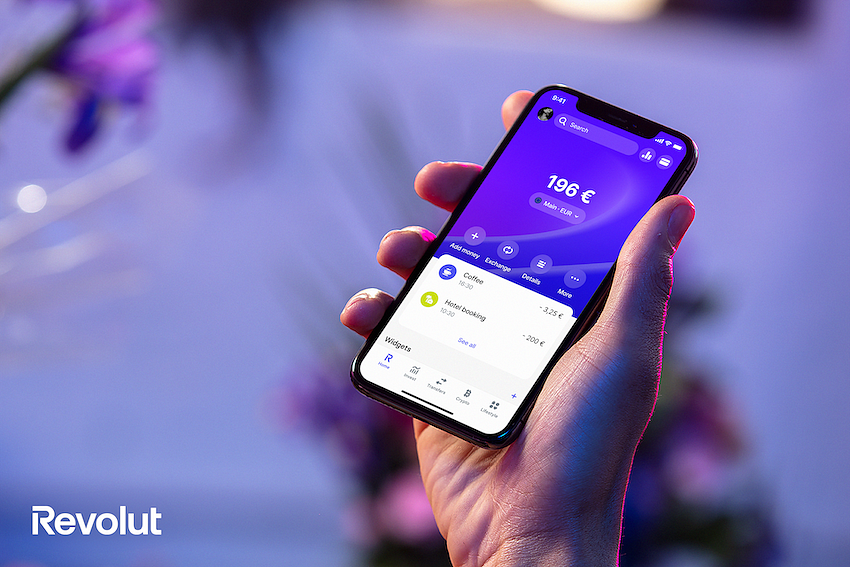
Rather than separating services into multiple products, Revolut Mobile consolidates banking, payments, cards, analytics, and controls into a single interface. The app acts as a personal financial command center, allowing users to observe, manage, and adjust their financial behavior in real time.
This consolidation reflects a broader industry trend toward financial super apps, but Revolut Mobile distinguishes itself by maintaining a clean interface despite increasing functional density.
User Experience Architecture
Interface Philosophy
Revolut Mobile emphasizes clarity and immediacy. Information hierarchy is designed to surface the most relevant data at the moment it is needed. Account balances, recent transactions, and key actions are visible within seconds of opening the app.
Typography, color usage, and motion design are deliberately restrained to avoid cognitive overload. This is particularly important in financial contexts where user trust is directly linked to perceived clarity and control.
Navigation Structure
Navigation within Revolut Mobile is task-oriented rather than department-oriented. Users do not need to understand traditional banking categories to find features. Instead, actions such as paying, exchanging, saving, or analyzing spending are grouped by intent.
This design reduces friction and aligns with how users mentally model their financial needs in everyday situations.
Core Functional Layers
Account Management
Revolut Mobile allows users to manage multiple account balances within a single profile. These balances can represent different currencies or financial purposes. The app treats accounts as flexible containers rather than rigid products.
This flexibility enables users to adapt the app to personal financial structures, whether for daily expenses, travel, or savings goals.
Payments and Transfers
Payments within Revolut Mobile are designed to be instant and borderless. The app emphasizes peer-to-peer transfers, merchant payments, and international transactions with minimal delay and transparent pricing.
Transaction confirmation is immediate, reinforcing a sense of real-time control. Each transaction is accompanied by metadata that enhances traceability and understanding.
Cards and Spending Control
Revolut Mobile integrates physical and virtual cards into the app interface. Users can issue, freeze, or customize cards directly from their mobile device.
Spending controls allow granular management of card usage, including merchant categories, geographic restrictions, and transaction types. This level of control transforms cards from passive payment tools into actively managed financial instruments.
Technical Architecture Perspective
Cloud-Native Infrastructure
Revolut Mobile operates on cloud-native infrastructure designed for scalability and resilience. This allows the system to handle transaction spikes, international usage patterns, and rapid feature deployment.
The cloud-based approach supports continuous updates without disrupting user access, reinforcing the perception of reliability despite rapid innovation.
Real-Time Ledger Systems
At the core of Revolut Mobile lies a real-time ledger system. Unlike batch-processed banking systems, transactions are recorded and reflected instantly.
This immediacy supports features such as instant notifications, real-time balance updates, and dynamic analytics, which are essential to the mobile-first experience.
API-Driven Modularity
The app’s functionality is built on modular services connected through internal APIs. This architecture enables Revolut Mobile to add, modify, or retire features without destabilizing the entire system.
From a technical standpoint, this modularity is key to maintaining agility in a highly regulated and competitive environment.
Security and Trust Framework
Authentication Models
Revolut Mobile relies heavily on app-based authentication mechanisms. Biometric verification, device binding, and behavioral analysis form a layered security model.
This approach balances strong protection with user convenience, reducing reliance on traditional passwords while maintaining high security standards.
Transaction Monitoring
The app continuously monitors transactions for anomalous behavior. Rather than relying solely on static rules, the system evaluates contextual signals such as location, device behavior, and transaction patterns.
When irregularities are detected, users are notified instantly, reinforcing transparency and trust.
User-Controlled Security
A defining feature of Revolut Mobile is the extent of security control delegated to users. From freezing cards to disabling specific transaction types, users are empowered to respond immediately to potential risks.
This user-centric security philosophy reflects a shift away from opaque institutional control toward participatory financial safety.
Financial Analytics and Insights
Spending Categorization
Revolut Mobile automatically categorizes spending to provide structured insights into user behavior. Categories are designed to be intuitive and relevant to daily life.
The categorization system transforms raw transaction data into actionable information, enabling users to reflect on and adjust their financial habits.
Visual Analytics
Charts, graphs, and summaries are used sparingly but effectively. Visual elements are designed to support understanding rather than impress aesthetically.
This restrained use of data visualization aligns with the app’s broader philosophy of functional clarity.
Behavioral Feedback Loops
By combining notifications, analytics, and controls, Revolut Mobile creates feedback loops that influence user behavior. Spending alerts and budget thresholds subtly encourage awareness and discipline without overt intervention.
International Orientation
Multi-Currency Functionality
Revolut Mobile is inherently international in design. Multi-currency balances coexist seamlessly, allowing users to hold, exchange, and spend across currencies.
This capability is particularly relevant for travelers, remote workers, and globally connected individuals.
Cross-Border Efficiency
The app reduces friction associated with cross-border transactions by simplifying processes and standardizing interfaces. Currency exchange and international transfers are integrated into everyday usage rather than treated as exceptional events.
This normalization of international finance reflects changing patterns of mobility and work.
Regulatory and Compliance Context
Embedded Compliance
While Revolut Mobile presents a streamlined interface, compliance processes operate continuously in the background. Identity verification, transaction monitoring, and reporting mechanisms are integrated into system workflows.
From a user perspective, these processes are designed to be minimally intrusive while satisfying regulatory requirements.
Transparency and Communication
Revolut Mobile communicates compliance-related actions directly within the app. Notifications and in-app messages explain restrictions or requests in plain language.
This communication strategy reduces frustration and builds understanding of regulatory realities.
Product Evolution and Feature Expansion
Continuous Development Model
Revolut Mobile follows a continuous development cycle, with frequent updates that introduce refinements and new features. This cadence reflects software industry practices rather than traditional banking release cycles.
Users experience the app as a living product that evolves alongside their needs.
Feature Experimentation
The modular architecture enables controlled experimentation. Features can be tested with subsets of users, refined based on feedback, and scaled progressively.
This experimentation culture supports innovation while managing risk.
Market Positioning and Identity
Digital-Native Branding
Revolut Mobile positions itself as a digital-native alternative to conventional financial institutions. Branding emphasizes autonomy, speed, and global accessibility.
This identity resonates with users who value control and transparency over institutional familiarity.
Competitive Differentiation
Rather than competing solely on pricing or features, Revolut Mobile differentiates through integration and experience. The app’s value lies in how seamlessly it combines tools into a coherent system.
This systemic approach creates switching costs based on convenience rather than contractual lock-in.
Societal and Behavioral Implications
Changing Financial Habits
Revolut Mobile contributes to changing how individuals perceive and manage money. Real-time visibility and control encourage more active engagement with finances.
This shift may lead to greater financial literacy over time, driven by everyday interactions rather than formal education.
Democratization of Financial Tools
By lowering barriers to access and simplifying complex processes, Revolut Mobile extends advanced financial tools to a broader audience.
This democratization aligns with broader fintech narratives around inclusion and empowerment.
Limitations and Challenges
Complexity Management
As features accumulate, maintaining simplicity becomes increasingly challenging. Revolut Mobile must continuously balance expansion with usability.
Interface discipline and thoughtful information architecture are critical to sustaining clarity.
Trust and Scale
Operating at scale requires maintaining trust across diverse regulatory and cultural environments. Any disruption can have amplified effects in a mobile-first context.
This places ongoing pressure on reliability, communication, and governance.
The Future Trajectory of Revolut Mobile
Toward Financial Operating Systems
Revolut Mobile can be viewed as an emerging financial operating system rather than a standalone app. It integrates multiple services through a unified interface and shared data layer.
This trajectory suggests deeper integration into users’ financial lives, potentially extending into adjacent domains.
Adaptive Personalization
Future evolution is likely to focus on adaptive personalization, where insights and controls dynamically adjust to individual behavior patterns.
Such personalization would further blur the line between financial management and intelligent assistance.
Conclusion
Revolut Mobile exemplifies the transformation of finance into a software-driven, user-centered experience. It challenges traditional banking assumptions by prioritizing real-time interaction, transparency, and global usability.
As a mobile-first financial environment, Revolut Mobile reflects broader technological and societal shifts. Its significance lies not only in the features it offers but in how it redefines expectations of what financial tools can be in a digital age. The app stands as both a product and a signal of the direction in which modern finance continues to evolve.
