
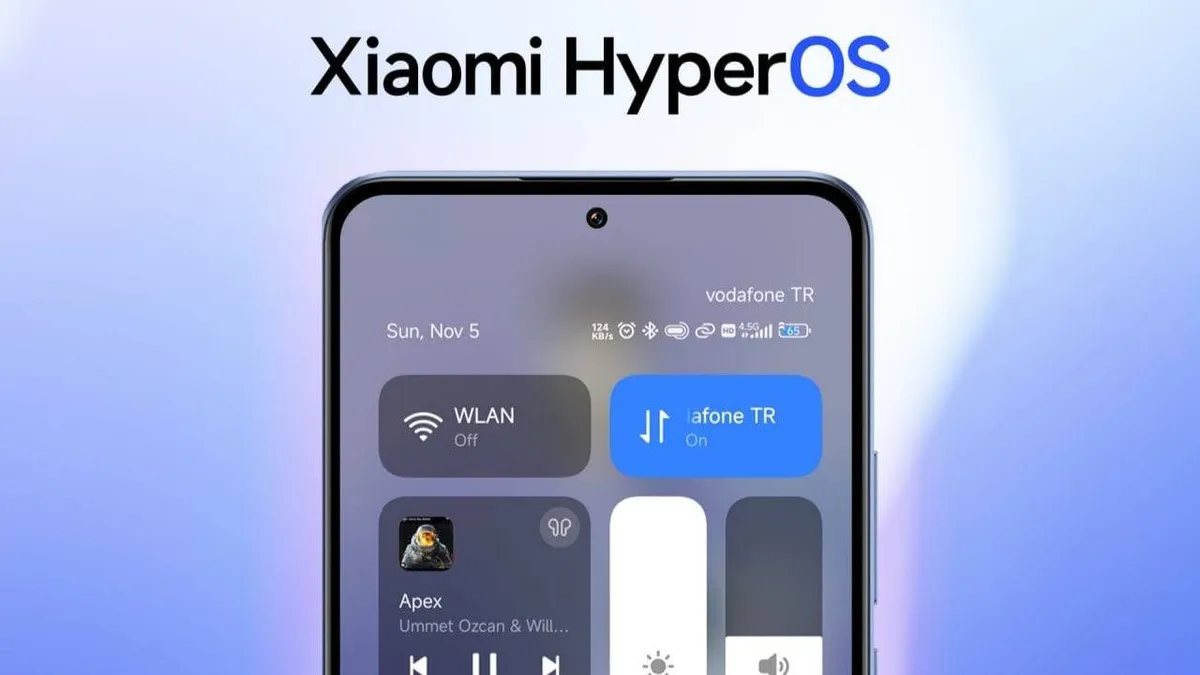
Overview Table of Xiaomi HyperOS 3.1 Features
| Feature Area | Key Improvements | User Benefit |
|---|---|---|
| System Performance | Optimized memory handling, faster app launches | Smoother multitasking and reduced lag |
| User Interface | Refined animations, improved transitions | Cleaner, more fluid visual experience |
| HyperIsland | Smarter contextual actions | Faster access to relevant information |
| Customization | Enhanced themes, folders, widgets | More control over home screen layout |
| Lock Screen | Improved depth effects and editing tools | Personal and visually appealing lock screens |
| Audio Controls | Unified volume management | Easier sound adjustments |
| Connectivity | Improved Bluetooth memory | More reliable device connections |
| AI Integration | Context-aware suggestions | Smarter system responses |
| Battery Management | Adaptive background control | Better battery longevity |
| Stability | Reduced background crashes | Consistent long-term performance |
Introduction to Xiaomi HyperOS 3.1
Xiaomi HyperOS 3.1 represents the next refinement stage in Xiaomi’s long-term operating system vision. Instead of being a radical redesign, Xiaomi HyperOS 3.1 focuses on system maturity, stability, performance tuning, and intelligence-driven improvements. It builds upon the architectural foundation laid by earlier HyperOS versions and enhances how the system reacts to user behavior, manages resources, and presents information visually.
This update is designed to feel more responsive, more consistent, and more adaptive to everyday usage patterns. Xiaomi positions Xiaomi HyperOS 3.1 as a user-experience-first release, emphasizing smoothness, smarter UI behavior, deeper personalization, and background optimizations that quietly improve daily interactions without demanding constant attention.
Xiaomi HyperOS 3.1 also strengthens Xiaomi’s ecosystem strategy by improving cross-device logic, refining UI coherence, and ensuring better long-term performance sustainability across a wide range of devices.
Xiaomi HyperOS 3.1 is a significant and positive refinement of Xiaomi’s operating system strategy, focusing on delivering a faster, smarter, and more reliable user experience. Rather than chasing dramatic visual changes, this update emphasizes meaningful improvements that users feel every day—better performance stability, smoother animations, enhanced intelligence, and deeper personalization control.
With HyperOS 3.1, Xiaomi strengthens its vision of a unified software platform that works efficiently across devices while adapting intelligently to user behavior. The update improves how the system manages resources, responds to input, and presents information, making everyday interactions more fluid and predictable. It is designed to quietly enhance usability without overwhelming users with unnecessary complexity.
This version represents Xiaomi’s confidence in its operating system direction, prioritizing long-term reliability, intelligent automation, and consistent performance across a wide range of devices.
System Architecture Improvements
Refined Core Framework
Xiaomi HyperOS 3.1 introduces internal refinements to the system framework that affect how processes are scheduled and managed. While invisible to users, these changes significantly influence overall smoothness. Background tasks are now prioritized more intelligently, allowing frequently used apps to remain responsive without overloading system resources.
Memory Allocation Enhancements
Memory allocation has been fine-tuned to reduce unnecessary background memory pressure. Applications that remain idle for long periods are handled more efficiently, ensuring that active apps retain priority access to RAM. This leads to fewer reloads when switching between apps and improves multitasking stability.
Improved Thread Scheduling
The update optimizes CPU thread scheduling, ensuring that foreground tasks receive immediate processing attention. This results in faster touch response, smoother scrolling, and reduced stutter during heavy usage scenarios such as gaming or multi-window operation.
Performance and Speed Improvements
Faster App Launch Times
Xiaomi HyperOS 3.1 improves app launch behavior by optimizing preloading and background caching logic. Apps that are frequently used open faster, while rarely used apps consume fewer system resources. This balance ensures speed without unnecessary power consumption.
Reduced UI Latency
Touch input response has been enhanced, especially during rapid gestures such as app switching, scrolling through long lists, and navigating system settings. These refinements give the interface a more immediate and fluid feel.
Optimized Animation Pipeline
Animations have been reworked to maintain visual smoothness even during high system load. Instead of dropping frames, the system dynamically adapts animation complexity to ensure consistent motion.
User Interface Refinements
Visual Consistency Across the System
Xiaomi HyperOS 3.1 improves UI consistency by standardizing spacing, icon proportions, and typography across system apps. This creates a more cohesive experience where menus, dialogs, and notifications feel unified rather than fragmented.
Enhanced System Animations
System animations are smoother and more natural. Opening apps, switching between screens, and interacting with system elements now feels more organic due to refined motion curves and timing adjustments.
Improved Gesture Navigation
Gesture-based navigation has been fine-tuned to reduce accidental triggers. Edge detection is more precise, and gesture animations align better with user movement, making navigation feel intuitive and predictable.
HyperIsland Evolution
Smarter Context Awareness
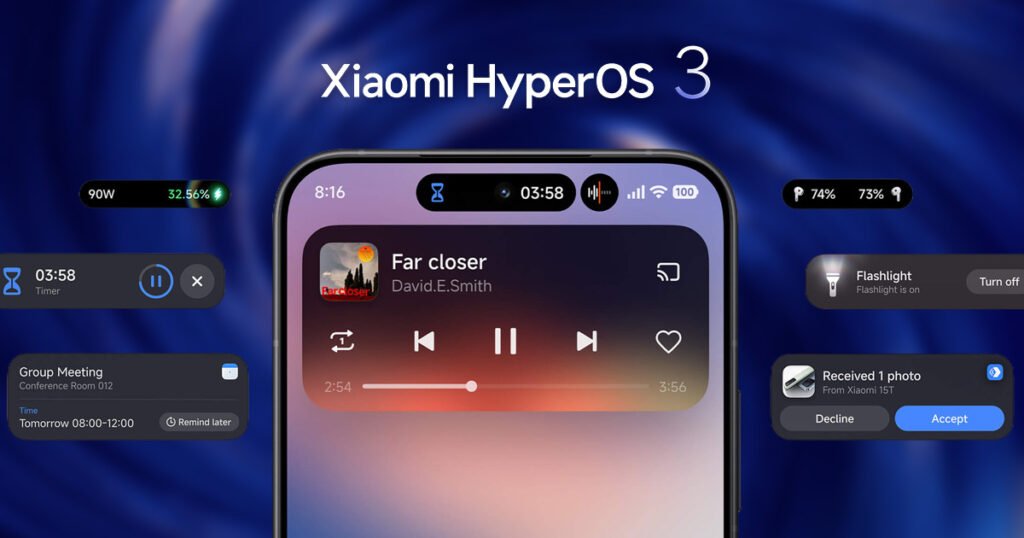
HyperIsland in Xiaomi HyperOS 3.1 becomes more than a passive display area. It actively interprets context such as time, location, usage habits, and active apps to surface relevant actions. This allows users to access useful features without manually navigating through menus.
Adaptive Content Display
The content displayed within HyperIsland adapts dynamically. When media is playing, it prioritizes playback controls. During navigation, it highlights relevant tools. When idle, it provides subtle system insights without overwhelming the screen.
Reduced Visual Clutter
HyperIsland now focuses on clarity. Unnecessary elements are hidden unless relevant, ensuring that information is presented cleanly and efficiently.
Home Screen Customization Enhancements
Flexible Folder Sizes
Xiaomi HyperOS 3.1 introduces flexible folder resizing options that allow users to adjust folder dimensions to better match their home screen layout. This enables denser app organization while maintaining accessibility.
Improved Drag-and-Drop Behavior
Dragging apps and widgets feels more responsive and precise. The system better predicts placement intent, reducing accidental misalignment and improving layout control.
Enhanced Widget Integration
Widgets integrate more seamlessly into the home screen grid. Their resizing behavior is smoother, and their interaction logic is more consistent across different widget types.
Lock Screen Improvements
Advanced Depth Effects
Depth-based lock screen effects have been refined to better separate foreground subjects from backgrounds. This enhances visual appeal while maintaining readability for clocks and notifications.
Lock Screen Editing Tools
Xiaomi HyperOS 3.1 allows users to adjust lock screen elements directly from customization settings. Positioning clocks, adjusting font styles, and modifying layout spacing is now more intuitive.
Notification Clarity
Lock screen notifications are better organized, reducing clutter while ensuring important alerts remain visible and accessible.
Audio and Volume Control Enhancements
Unified Volume Panel
The volume control interface has been redesigned to allow simultaneous adjustment of multiple sound categories. This eliminates the need to navigate separate menus for media, calls, and notifications.
Improved Audio Consistency
Audio behavior across apps is more consistent, reducing sudden volume changes and ensuring smoother transitions between different audio sources.
Connectivity Improvements
Enhanced Bluetooth Memory
Xiaomi HyperOS 3.1 improves Bluetooth pairing memory, allowing devices to reconnect more reliably. This is especially useful for users who frequently switch between wireless accessories.
Faster Connection Recovery
When connectivity interruptions occur, the system recovers faster without requiring manual intervention, improving overall reliability.
AI and Intelligent System Behavior
Contextual Suggestions
The system intelligently suggests actions based on user behavior patterns. These suggestions appear subtly and only when relevant, helping users complete tasks faster.
On-Device Intelligence
Xiaomi HyperOS 3.1 emphasizes on-device intelligence rather than cloud dependence. This ensures faster response times and better privacy protection.
Adaptive Learning
The system continuously learns usage patterns to optimize performance, battery usage, and app prioritization without explicit user input.
Battery and Power Management
Smarter Background Control
Background apps are managed more intelligently to reduce unnecessary power consumption while preserving functionality for essential services.
Adaptive Performance Scaling
Performance dynamically adjusts based on current activity. Intensive tasks receive full system resources, while idle periods prioritize energy efficiency.
Improved Standby Efficiency
Idle battery drain has been reduced through better sleep state handling and background task regulation.
Security and Privacy Enhancements
Improved Permission Handling
Permission prompts are clearer and more contextual, helping users understand why access is required without unnecessary complexity.
Background Access Monitoring
Xiaomi HyperOS 3.1 monitors background access patterns more efficiently, alerting users to unusual behavior while avoiding intrusive notifications.
Stability and Long-Term Reliability
Reduced System Crashes
Internal error handling has been strengthened to prevent system crashes and app freezes, especially during prolonged usage.
Smoother Updates
Incremental system updates install faster and more reliably, minimizing downtime and ensuring smoother transitions between versions.
Better Compatibility
Xiaomi HyperOS 3.1 improves compatibility across different hardware configurations, ensuring consistent performance across devices.
Ecosystem Integration
Cross-Device Continuity
Xiaomi’s ecosystem integration is enhanced through smoother device interaction logic. Transitions between phones, tablets, and other Xiaomi devices feel more seamless.
Unified Design Language
Design elements remain consistent across devices, reinforcing a unified user experience.
Final Thoughts on Xiaomi HyperOS 3.1
Xiaomi HyperOS 3.1 is a refinement-focused update that prioritizes real-world usability over flashy additions. By enhancing performance, improving system intelligence, refining visuals, and strengthening stability, it delivers a noticeably smoother and more cohesive experience.
Rather than reinventing the system, Xiaomi HyperOS 3.1 perfects what already exists. It reflects Xiaomi’s growing confidence in its operating system direction and lays a strong foundation for future updates that will build on this stability-first philosophy.
For users, the result is a system that feels faster, smarter, and more dependable every day.Xiaomi HyperOS 3.1 stands out as a strong and positive evolution of the HyperOS platform, delivering noticeable improvements where they matter most. By refining system performance, enhancing interface smoothness, improving customization tools, and strengthening intelligent behavior, this update elevates the overall user experience without disrupting familiar workflows.
Instead of introducing superficial changes, HyperOS 3.1 focuses on polishing the core system. The result is an operating system that feels faster, more stable, and more responsive over time. Features like smarter context awareness, improved battery management, and refined UI consistency contribute to a system that works quietly and efficiently in the background.
