
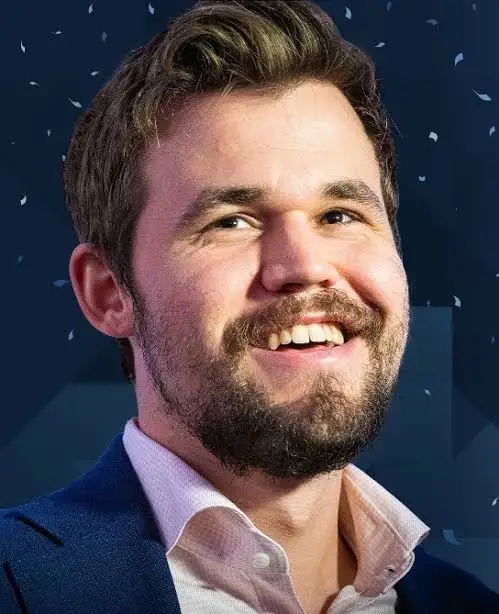
Overview Table
| Category | Details |
|---|---|
| Full Name | Sven Magnus Øen Carlsen |
| Birth | 30 November 1990, Tønsberg, Norway |
| Nationality | Norwegian |
| Primary Domain | Chess (Classical, Rapid, Blitz), later expanded into fantasy sports, entrepreneurship, and digital chess ecosystems |
| Titles | Grandmaster (2004), World Chess Champion (2013–2023), World Rapid Champion, World Blitz Champion |
| Distinct Strengths | Universal playing style, exceptional memory, endgame mastery, psychological resilience, intuitive calculation, minimal-error decision-making |
| Major Contributions | Professionalization of elite chess, global popularization of online chess, identity-driven brand building, dissolving boundaries between sports, technology, and cognitive gaming |
| Characterized As | The most complete chess player in history; a competitor who thrives on uncertainty, creativity, and control |
| Legacy Indicators | Multi-format dominance, influence on digital platforms, mentoring through global academies, redefining the image of a modern chess champion |
Magnus Carlsen Introduction: The Birth of a Modern Chess Archetype
Magnus Carlsen occupies a position in global chess that transcends simple achievement or statistical supremacy. He represents a philosophical transformation in how chess is understood, practiced, commercialized, and emotionally experienced. Although many chess champions before him shaped eras, none have encapsulated the synthesis of intelligence, competitive instinct, digital fluency, and cultural adaptability quite the way Magnus Carlsen has. His rise from a quiet Norwegian prodigy to a global cognitive icon is a story of disciplined evolution, identity construction, and continuous reinvention.
This deep dive examines Magnus Carlsen not merely through the lens of wins, moves, or elo ratings, but as a figure whose influence spans psychology, digital ecosystems, sports culture, branding, and the redefinition of intellectual excellence in the 21st century.
Magnus Carlsen journey is not the story of a genius appearing fully formed. It is the story of someone constantly upgrading the architecture of his own mind. His life reveals how intelligence is not static; rather, it is adaptive, layered, and shaped through iterative experience, deliberate exposure to challenge, and refusal to stagnate. This philosophy underpins every stage of his evolution.
As the world’s strongest chess player across formats for more than a decade, Carlsen developed a style that does not rely on a single identifiable pattern. His opponents often describe him as unpredictable because his approach integrates classical precision, computer-era depth, intuitive speed, and psychological pressure. In many ways, he is the first true hybrid of human intuition and computational training, yet distinctly resistant to becoming mechanical or algorithmic.
To understand Magnus Carlsen is to understand the emerging blueprint for 21st-century cognitive excellence. This article explores that blueprint in full detail.
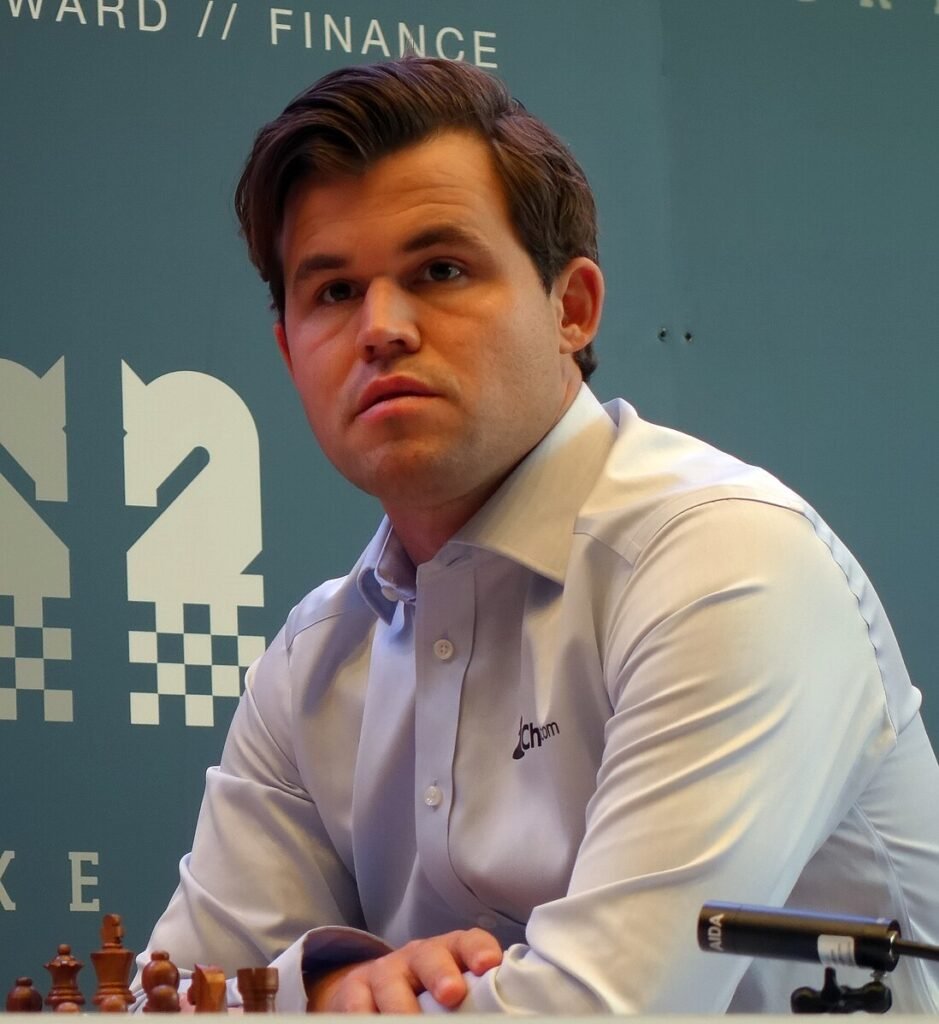
Magnus Carlsen Early Life: The Foundations of Cognitive Independence
Magnus Carlsen’s childhood was shaped less by strict training regimens and more by an environment that rewarded curiosity. His parents recognized early that Magnus possessed unusual tendencies toward memory and pattern recognition. Yet they did not push chess onto him. Instead, they cultivated an atmosphere where exploration was encouraged, whether through reading, puzzles, map learning, or construction sets.
The famous stories about his ability to memorize maps and list the population statistics of European cities are not merely cute anecdotes; they reveal how early cognitive organization formed in Magnus Carlsen. He did not memorize facts for the sake of display. He memorized because the act of organizing information allowed him to create internal architectures of structure and meaning. This is the same mental engine later visible in his chess preparation, where he integrates vast positional templates without relying on mechanical recall.
Chess entered his life as one challenge among many. What distinguished him was his motivation: he enjoyed problems that did not have straightforward solutions. This early relationship with cognitive difficulty shaped the adult he would become. He never approached chess as a static discipline; he approached it as a dynamic environment requiring constant creativity.
By the age of eight, his talent was undeniable, but his temperament was equally important. Magnus did not fear losing, nor did he attach emotional identity to immediate outcomes. Instead, he developed a mindset that treated every loss as a data-point for growth. This resilience became a defining feature of his professional identity.
Magnus Carlsen The Rise of a Young Grandmaster: Discipline Meets Instinct
Magnus Carlsen ascent from prodigy to grandmaster was rapid but never chaotic. At an age when most young talents succumb to pressure, Carlsen demonstrated an emotional maturity that surprised coaches and parents alike. His training during these years was marked by two core characteristics:
- Self-directed learning
- Intense competitive desire
He did not study openings in order to memorize them. Instead, he used them as frameworks through which he could test ideas in real time. This helped him avoid the rigidity many young prodigies fall into. He wanted to understand positions, not reproduce them. His brain naturally resisted rote learning and instead processed information relationally.
When he earned the grandmaster title at thirteen, the chess world recognized that a new type of player had arrived. He did not resemble the theoretical specialists of previous generations, nor the purely intuitive artists. Instead, Carlsen represented a synthesis. He could calculate deeply but also simplify positions elegantly. He could play aggressively but also defend with patience.
Observers noted that he had a distinct refusal to accept defeat in slightly worse positions. This tenacity would later become one of the cornerstones of his championship identity.
Magnus Carlsen The Evolution of Style: The Universal Player
As Carlsen matured, his style evolved into what many describe as universal. He did not bind himself to one school of thought or one set of patterns. His approach became fluid, modular, and deeply adaptive.
Key Characteristics of Carlsen’s Mature Style
- Endgame Mastery
His endgames demonstrate not just technical competence but psychological acuity. Carlsen’s ability to convert minimal advantages destabilizes opponents, who begin to doubt their defensive instincts. - Opening Neutrality
Unlike champions known for deep theoretical weapons, Carlsen often chooses openings designed to minimize forced sequences. This allows him to reach positions where intuition matters more than memorization. - Strategic Harmonics
Carlsen sees connections between pawn structures, piece activity, and long-term spatial pressure in ways that rarely appear in computer analysis. His moves often embody multi-purpose flexibility rather than single-purpose aggression. - Psychological Pressuring
Opponents frequently report that Carlsen’s quiet moves exert more pressure than overt attacks. He subtly shifts the burden onto them, forcing them to solve problems over hours, leading to cumulative fatigue. - Clean Decision-Making
Carlsen’s decisions rarely overreach. He avoids speculative sacrifices unless deeply justified, maintaining control over the strategic narrative of the game.
Through this blend of technical precision and resilient creativity, he crafted an identity as perhaps the most complete player in chess history.
Magnus Carlsen The Championship Era: Redefining Global Chess
Magnus Carlsen’s rise to world champion in 2013 marked the beginning of a decade-long dominance that reshaped the chess landscape. His championship reign is notable not only for victories but for introducing new psychological architectures into top-level competition.
Psychological Elements of Carlsen’s Championship Success
- Neutralizing Opponents’ Strengths
Carlsen studied players not by memorizing their games but by understanding their emotional tendencies. He understood when they hesitated, when they overcommitted, or when they became uncomfortable. - Long-Form Mental Endurance
Many world championship games are battles of attrition, and Carlsen excelled in these environments. His focus did not fade. Instead, his energy often seemed to increase in the fifth or sixth hour of play. - Strategic Minimalism
Carlsen popularized the idea that small positional advantages could be weaponized with enormous force. His endgame conversions became almost mythic. - Adaptation Across Formats
Unlike champions of the classical era, Carlsen became equally dominant in rapid and blitz, creating a multi-format supremacy unprecedented in chess.
Impact on Global Chess Culture
Carlsen’s dominance coincided with the digital chess revolution. Online streaming, championship broadcasts, and new audiences helped transform chess into a mainstream sport. Carlsen’s personality and playing style made him the face of this transformation.
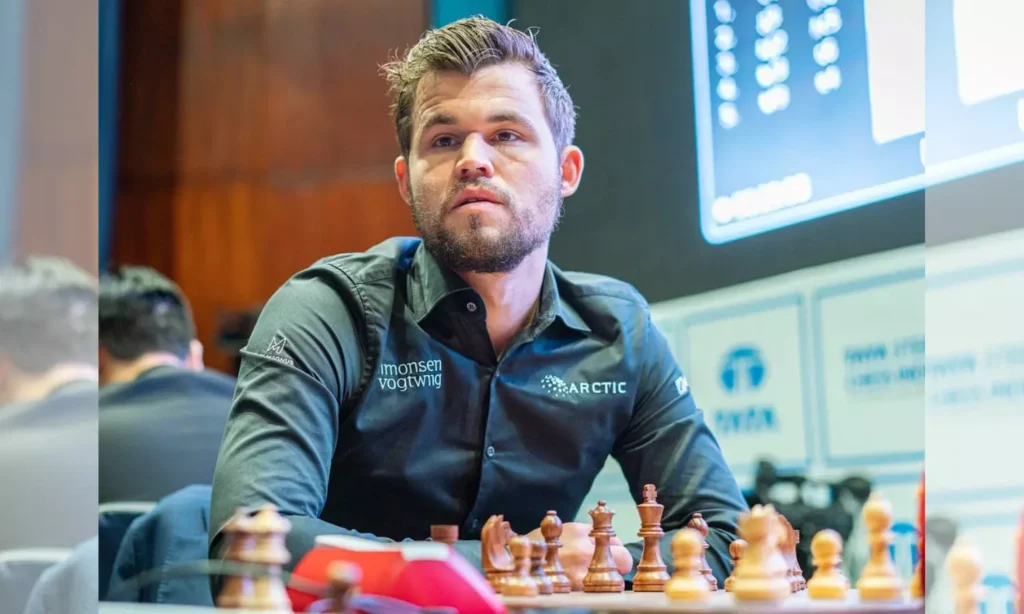
Magnus Carlsen Beyond the Board: Brand Building, Digital Identity, and Entrepreneurship
Carlsen is more than a chess champion. He is a digital-era entrepreneur who recognized early that chess needed modernization. His vision helped push the sport into new business models, new media formats, and global entertainment ecosystems.
Key Aspects of Carlsen’s Off-Board Identity
- Chess Streaming and Digital Presence
Carlsen’s games became central to the rise of online chess platforms. His presence gave credibility to new technologies and formats. - Entrepreneurial Initiatives
Carlsen invested in and helped shape companies that linked chess with technology, fantasy sports, and AI-driven training systems. His entrepreneurial mindset focuses on creating ecosystems rather than isolated products. - Global Cultural Symbol
He embodies a modern intellectual identity that blends competitiveness with authenticity. Unlike earlier champions who maintained a strict formal distance, Carlsen chooses transparency, vulnerability, and relatability.
Magnus Carlsen Mental Architecture: How Magnus Carlsen Thinks
Carlsen’s cognitive architecture is the heart of his uniqueness. His intelligence is not simply a matter of memory or calculation; it is about how he organizes experience, how quickly he adapts to novelty, and how comfortably he operates under ambiguity.
Key Cognitive Traits
- Intuition Over Calculation
Carlsen often says he calculates less than people think. His brain filters positions rapidly, identifying high-value options without brute force. - State Management
His ability to regulate emotion is exceptional. He rarely collapses after blunders and instead resets his mind instantly. - Pattern Relationality
Carlsen does not store patterns in isolation. He stores them as networks of possibilities, enabling flexible transitions between strategies. - Psychological Projection
Carlsen often senses what positions opponents dislike and steers the game toward those areas.
Magnus Carlsen Reinvention: Why Carlsen Is Not Afraid to Leave Classical Titles Behind
One of the most defining aspects of Carlsen’s identity is his refusal to cling to tradition. His decision to step away from defending the world classical title sparked global debate. But it also showed that Carlsen values personal growth over external validation.
Key Reasons for His Reinvention Philosophy
- Avoiding Stagnation
Carlsen believed that preparing for classical world championships became repetitive and uninteresting. - Creative Liberation
He sought new challenges—rapid, blitz, online formats, entrepreneurial ventures—that stimulated his competitive instincts. - Redefining Success
Carlsen separated the idea of being world champion from the idea of being the best. He trusted his rating dominance as a truer reflection of strength.
Magnus Carlsen Modern Influence: The Carlsen Effect in the Digital Era
Carlsen’s cultural influence stretches far beyond traditional chess. His impact includes:
- The rise of online chess communities
- The revival of chess popularity among youth
- The growth of chess as a streaming and entertainment category
- New models for training and skill development
- A shift in how intellectual competition is perceived globally
The Carlsen Effect is visible in how young players study chess today. They model their training on his balance of intuition, creativity, and endurance. His games are used not merely for analysis but for understanding how modern chess players must think.
Magnus Carlsen Legacy: The Architecture of a Timeless Competitor
Magnus Carlsen’s legacy rests on several pillars:
- Multi-Format Dominance
His ability to excel in classical, rapid, and blitz simultaneously is unmatched. - Redefinition of Champion Identity
He showed that a world champion could be informal, humorous, relaxed, yet intensely competitive. - Contribution to Global Chess Culture
Carlsen helped make chess an accessible global sport, not just an elite intellectual pursuit. - Cognitive Blueprint for Future Generations
His approach to learning and decision-making will influence how future champions train. - A Life of Constant Reinvention
Carlsen never allowed himself to become static. Every phase of his career reflects forward motion.
Conclusion
Magnus Carlsen stands as a symbol of modern excellence, not because he wins, but because of how he wins. His journey from prodigy to global icon reveals a mind structured around curiosity, adaptability, psychological strength, and relentless improvement. He embodies the idea that intelligence is not fixed, but dynamic. His influence on the sport of chess is unparalleled, and his legacy will outlast any rating list or trophy count.
In redefining himself continually, Carlsen teaches a lesson that extends far beyond chess: greatness is not a destination but an evolving creative process.
